
Chimney Sweep
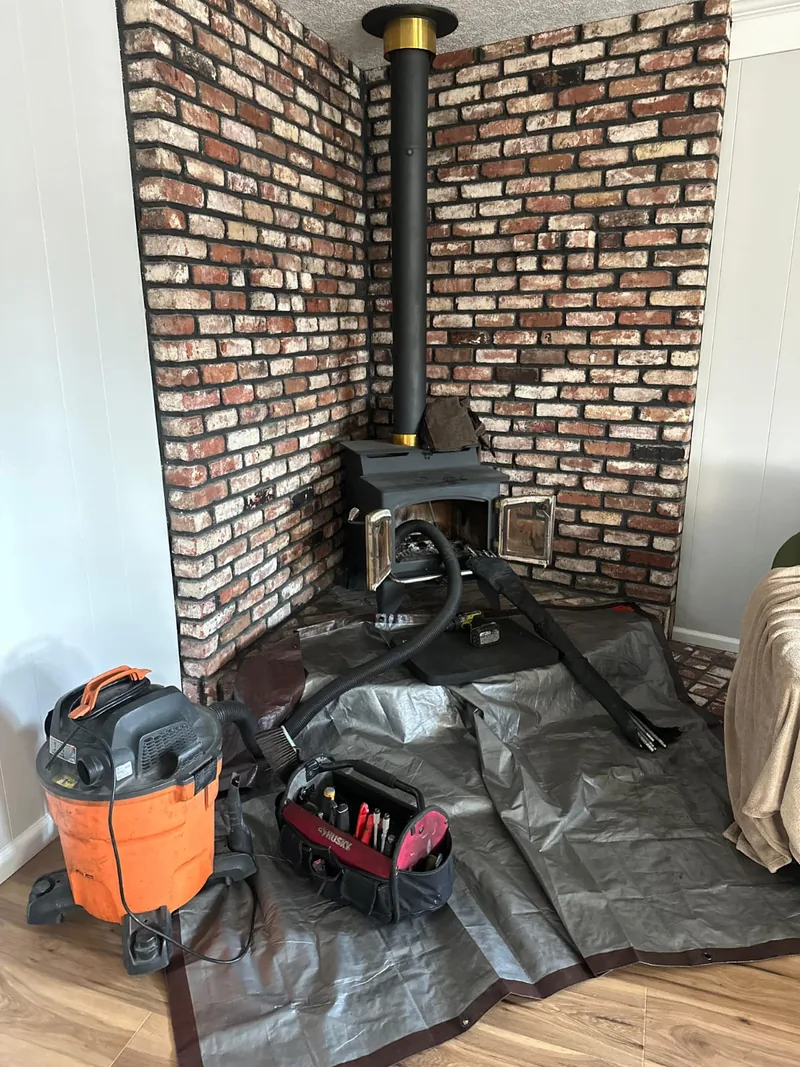
A full soot and creosote removal from the firebox through the smoke chamber, flue and cap — with drop cloths down and a HEPA vacuum running the whole time.
Learn more about Chimney SweepSome chimney problems announce themselves loudly. Others are silent until they are expensive. These are the eight signals worth acting on immediately.
Three findings warrant stopping use of the fireplace until someone qualified has looked at it. These are not scare tactics; they are the situations where continuing to burn makes the outcome materially worse.
That is glazed creosote off-gassing. It means third-degree deposits, which is the grade that causes flue fires. The smell is strongest in summer because warm humid air in the flue mobilises it.
If you can see glossy, run-looking deposits on the damper or upper firebox walls, that is glazed creosote and it needs chemical treatment and mechanical removal, not a routine brushing.
Debris falling into the firebox usually means the flue liner is breaking up. A compromised liner lets heat and combustion gas reach the framing behind the wall.
Any of these three, stop using the fireplace and book an inspection. We take emergency calls around the clock, and there is no charge for the estimate.
These are not same-day emergencies, but they all get worse and more expensive with time.
Efflorescence is the one most people ignore because the deposit itself is harmless. It is not the problem — it is the evidence. Salts only reach the surface if water is travelling through the masonry and evaporating there, so a white bloom on your brick means water is getting in somewhere upstream.
Water causes more chimney damage in the Sacramento region than fire does, and it works slowly enough that most homeowners never connect the cause to the effect.
Our climate is unusually hard on masonry. Long, extremely hot, bone-dry summers open hairline cracks through thermal expansion and contraction. Then a concentrated wet season drives rain into every one of those cracks. At foothill elevations like Folsom, El Dorado Hills and Loomis, that water freezes overnight, expands about nine percent, and pops brick faces off.
Inside the flue it is worse. Rain falling down an uncapped chimney mixes with acidic soot deposits to form a mild acid that dissolves mortar joints from within, where nobody can see it happening. The damper rusts, the smoke shelf holds standing water, and the liner joints open up.
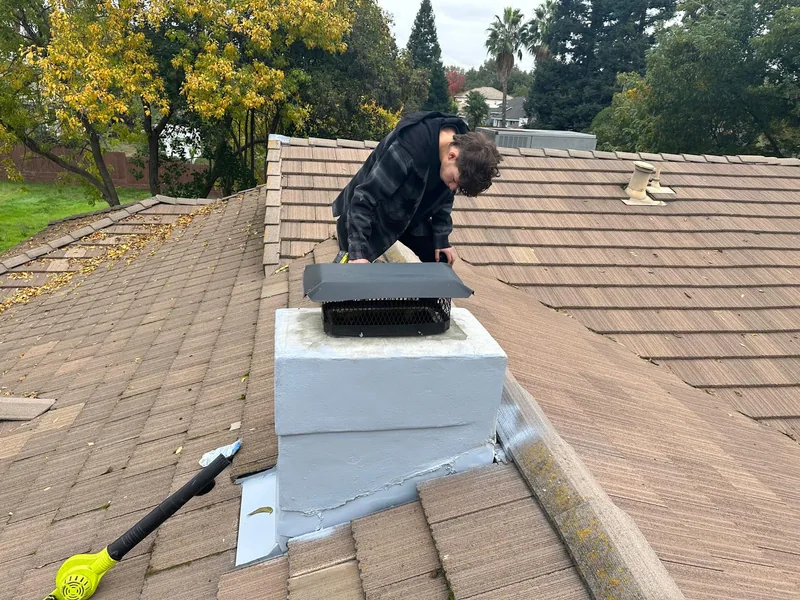
A cap is the cheapest component on a chimney and it prevents the most expensive category of damage. If your flue is open to the sky, that is the first thing to fix.
If you recognised anything from the first list, stop using the fireplace and call. If you recognised something from the second, book an inspection before the burning season rather than during it.
The practical reason to book in late spring or summer rather than November is not that we are trying to smooth our schedule. It is that any repair we find needs dry weather to be done properly, and crown sealing, tuckpointing and flashing work all want a dry roof. A crown crack found in July gets fixed in July. The same crack found in December waits for a dry week, and meanwhile it takes on water every storm.
Questions
It is worth acting on early, though it is not an emergency. Crown cracks up to about a quarter inch can normally be sealed with a flexible crown coating that bridges the movement, which is a modest job. Left alone, water widens the crack every season until the crown needs rebuilding, and by then it has usually been feeding water into the brick below for years.
Not until they are out, and possibly not immediately. Sealing an animal in means it dies in the flue, which becomes a blockage and a serious odour problem. Chimney swifts are also federally protected while nesting, so if that is what you have, there is a legal timing consideration too. We clear the flue first and then cap it so nothing returns.
With an inspection rather than a sweep. Until someone has looked, nobody knows whether you need a routine brushing or whether there is a structural problem. Booking a sweep blind on an unknown chimney occasionally means the technician arrives, opens it up and finds something that should have been assessed first.
Related
A full soot and creosote removal from the firebox through the smoke chamber, flue and cap — with drop cloths down and a HEPA vacuum running the whole time.
Learn more about Chimney SweepMore
William Chimney Sweep LLC
6130A Fair Oaks Blvd
Carmichael, CA 95608
(916) 269-0725
info@williamchimneysweepllc.com
| Monday | Open 24 hours |
|---|---|
| Tuesday | Open 24 hours |
| Wednesday | Open 24 hours |
| Thursday | Open 24 hours |
| Friday | Open 24 hours |
| Saturday | Open 24 hours |
| Sunday | Open 24 hours |
Fast response. No obligation.