
Connector pipe cleaned, not just the flue
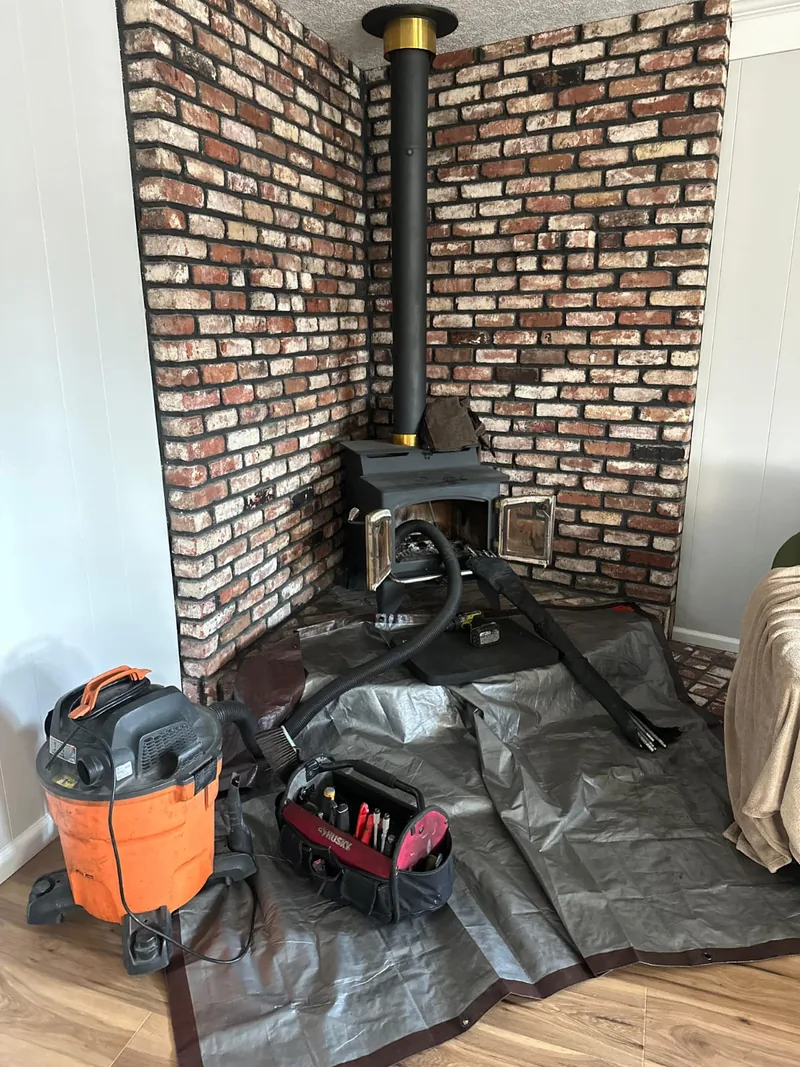
The single-wall pipe between the stove and the chimney is where creosote builds fastest and where most sweeps stop short. We take it apart.
Free estimates · Open 24/7
Freestanding stoves, inserts and gas log sets all have their own failure modes. We service the appliance and the venting as one system, because that is how they fail.
Free estimates, no travel fee inside 30 miles · 141 five-star reviews
Fast response. No obligation.
A stove or insert is a much tighter, hotter, more efficient burn than an open fireplace, and that changes what goes wrong. Efficient appliances send cooler exhaust up the flue, which deposits creosote faster in the connector pipe and the liner. Inserts hide almost the entire flue behind a surround, so nothing is visible until it is opened up. Gas sets fail differently again — corroded venting, drifting burner ports, and pilot assemblies that soot up and start producing carbon monoxide.
If you are not satisfied with the result, we come back and make it right at no charge.
Benefits
The single-wall pipe between the stove and the chimney is where creosote builds fastest and where most sweeps stop short. We take it apart.
Servicing an insert properly means pulling it or accessing the liner behind the surround. Brushing what is reachable from the front is not a service.
Burner ports, pilot and thermocouple cleaned and adjusted, venting checked for corrosion and blockage, and the flame pattern verified.
A stove with a failed door gasket over-fires, burns through wood fast, and blackens its own glass. Gasket replacement fixes both.
Warped baffles and cracked firebrick let heat reach places it should not. These are wear parts and they need replacing on schedule.
Stove-to-combustible clearances and hearth pad extension are checked against the appliance's own listing, not a rule of thumb.
Warning signs
Call (916) 269-0725 or request a quote online.
Process
Make and model, venting configuration, clearances, and hearth protection — checked against the appliance's own listed requirements.
Connector pipe disassembled where needed, liner brushed the full length, and the appliance flue collar cleared.
Ash and creosote removed, baffle, firebrick, air tubes and catalyst inspected, door gasket and glass checked and replaced if worn.
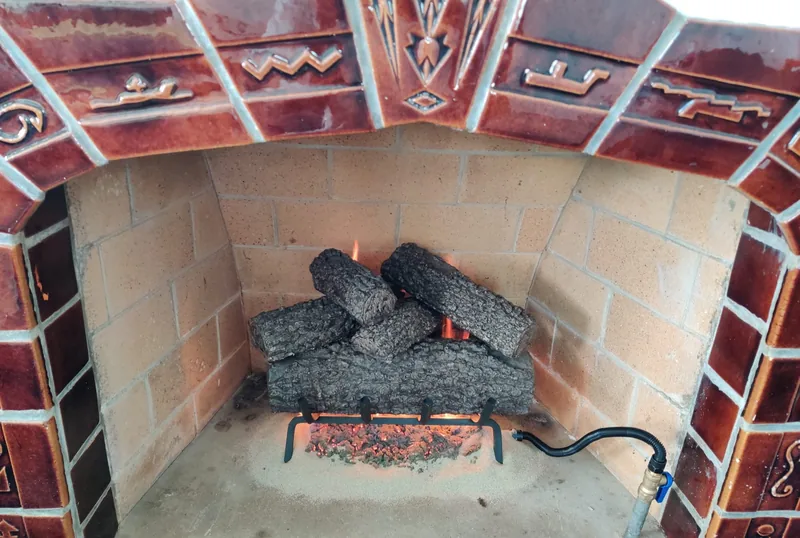
On gas sets: burner ports, pilot assembly and thermocouple cleaned, log placement corrected, flame pattern and venting verified.
Appliance run and observed under draft, then a written report on wear parts and anything needing attention before the next season.
Our work
Questions
Usually yes. Modern airtight stoves burn efficiently, which means cooler exhaust temperatures, and cooler exhaust deposits creosote faster — especially in the connector pipe. Regular winter burners often benefit from a mid-season check on top of the annual service.
Yes, and it is the most commonly skipped service we see. Gas produces no creosote, so people assume there is nothing to do. But gas venting corrodes, birds nest in gas flues, burner ports clog, and pilot assemblies soot up. A gas fireplace failure produces carbon monoxide rather than a visible mess, which is precisely why it needs checking.
Most often a failed door gasket letting air in where it should not, wet or unseasoned wood, or running the stove too low for too long. Burning at a proper temperature with seasoned wood keeps the airwash working and the glass clear. We check the gasket and the draft together, since they interact.
Sometimes, depending on the model and whether the liner is accessible behind the surround. Often the insert does need pulling to reach the flue and the connector properly. Any sweep who tells you an insert never needs pulling is not cleaning the whole system.
A faint burn-off smell for the first few fires of the season is normal, as dust on the burner and logs burns away. A persistent sulphur, sooty or sharp smell is not, and it can indicate incomplete combustion or a venting problem. Stop using it and have it checked.
Yes. Pellet appliances need their own routine — exhaust blower, heat exchanger, ash traps and vent pipe all need cleaning, and the burn pot and igniter are wear items. They are mechanically busier than a wood stove and less forgiving of a skipped service.
More
A full soot and creosote removal from the firebox through the smoke chamber, flue and cap — with drop cloths down and a HEPA vacuum running the whole time.
Learn more about Chimney SweepCSIA Level 1, 2 and 3 inspections — including the Level 2 with video scan that escrow, insurers and home sales require.
Learn more about Chimney InspectionStainless steel caps and spark arrestors, sized and fitted to your flue — the cheapest part of a chimney and the one that prevents the most expensive damage.
Learn more about Chimney Cap InstallationWilliam Chimney Sweep LLC
6130A Fair Oaks Blvd
Carmichael, CA 95608
(916) 269-0725
info@williamchimneysweepllc.com
| Monday | Open 24 hours |
|---|---|
| Tuesday | Open 24 hours |
| Wednesday | Open 24 hours |
| Thursday | Open 24 hours |
| Friday | Open 24 hours |
| Saturday | Open 24 hours |
| Sunday | Open 24 hours |
Fast response. No obligation.