Removes the fuel for a flue fire
Third-degree glazed creosote ignites around 451°F and can burn at over 2,000°F inside your flue. Removing it is the single most effective fire-prevention step there is.
Free estimates · Open 24/7
CSIA-certified sweeps, negative-air HEPA containment, and a written condition report on every visit. No soot in your living room, no surprises on the invoice.
Free estimates, no travel fee inside 30 miles · 141 five-star reviews
Fast response. No obligation.
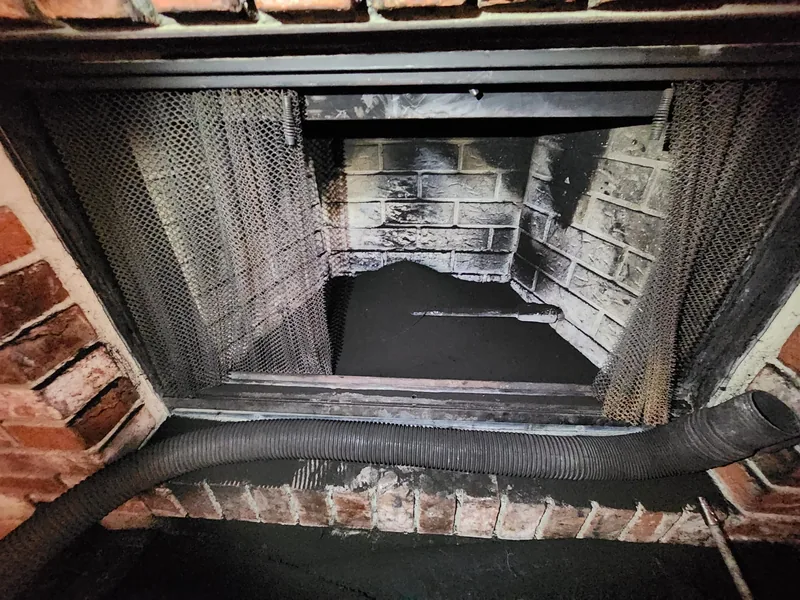
Creosote is what is left behind when wood smoke cools on the way up a cold flue. It starts as a light dusting, hardens into a crust, and eventually glazes into a tar-like layer that burns hot enough to crack clay tile. The Sacramento Valley makes this worse than most places: our mild, damp winters mean people burn low and slow rather than hot, which is exactly the condition that deposits creosote fastest. A sweep removes that fuel load before it becomes a flue fire.
If you are not satisfied with the result, we come back and make it right at no charge.
Benefits
Third-degree glazed creosote ignites around 451°F and can burn at over 2,000°F inside your flue. Removing it is the single most effective fire-prevention step there is.
A flue narrowed by buildup pulls poorly. Clearing it stops the smoke roll-out into the room that most people mistake for a damper problem.
We photograph the crown, cap, flashing, mortar joints and firebox on every visit. A hairline crown crack costs far less to seal than a rebuilt chase.
A blocked flue pushes combustion gases back into the house. Nests, leaf litter and collapsed tile are all things we find and clear.
Most California homeowner policies expect documented annual maintenance on a solid-fuel appliance. Our written report is the documentation.
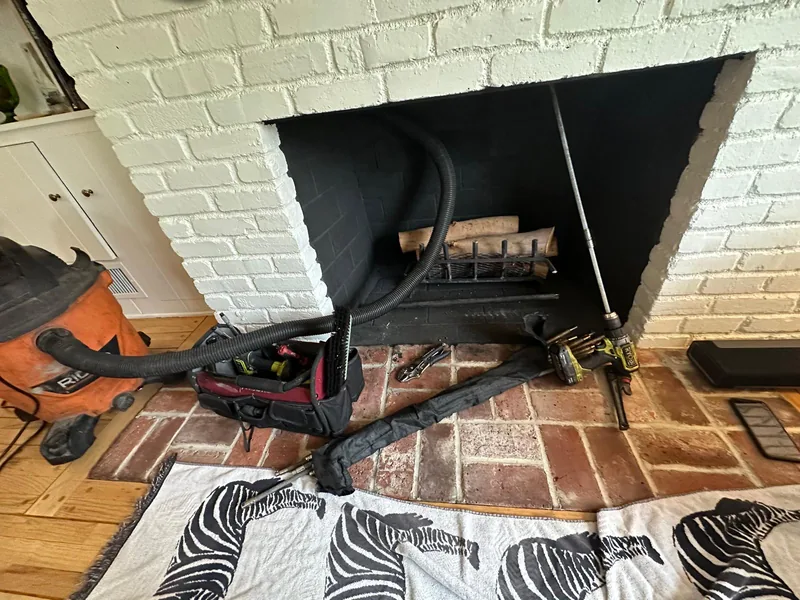
Drop cloths, a sealed firebox, and a HEPA vacuum running under negative pressure. The hearth is cleaner when we leave than when we arrived.
Warning signs
Call (916) 269-0725 or request a quote online.
Process
Drop cloths over the hearth and floor, then the fireplace opening is sealed and a HEPA vacuum is set to hold the firebox under negative pressure before a single brush goes in.
Poly or wire brushes sized to your exact flue are worked through the full length, breaking the creosote loose from the liner walls.
The smoke shelf above the damper collects the heaviest debris and is the step most often skipped. We hand-clean it and the smoke chamber every time.
Camera and light through the flue, then a look at the crown, cap, flashing and mortar from the roof. You see every photo we take.
A written condition report, in plain language, with anything urgent separated clearly from anything that can wait a season.
Local
Our work
Questions
The NFPA 211 standard is an annual inspection for every chimney, with sweeping as needed. In practice, if you burn roughly a cord of wood a year, that means an annual sweep. Occasional weekend-only burners can sometimes go two seasons — but the inspection is still yearly, because caps, crowns and flashing fail whether you burn or not.
A standard single-flue masonry fireplace takes about 45 minutes to an hour and a half. Heavy glazed creosote, a wood stove with offset pipe, or a chimney that has not been touched in a decade takes longer. We quote before we start and we do not charge more because the job ran long.
No. The firebox is sealed and held under negative pressure by a HEPA vacuum for the entire sweep, so soot travels into the vacuum rather than into the room. Drop cloths cover the hearth and the path to the door. This is the part we are judged on most, and we take it seriously.
They need annual inspection rather than brushing. Gas produces no creosote, but gas flues corrode, and they attract bird nests and debris just as readily as wood flues do. A blocked gas flue is a carbon monoxide problem, which is why the yearly check still matters.
Late spring through early autumn. Everyone calls at the first cold snap in November, so that is when the wait is longest. A summer sweep also means any repair we find has months of dry weather to be fixed in, rather than being done in the rain.
No. Those logs use a catalyst that can make some creosote more brittle, which helps a little at the margins. They remove nothing from the flue, they do not touch the smoke shelf, and they cannot inspect anything. Treat them as a mild supplement, never a substitute.
More
CSIA Level 1, 2 and 3 inspections — including the Level 2 with video scan that escrow, insurers and home sales require.
Learn more about Chimney InspectionStainless steel caps and spark arrestors, sized and fitted to your flue — the cheapest part of a chimney and the one that prevents the most expensive damage.
Learn more about Chimney Cap InstallationCrown sealing, tuckpointing, flashing, firebox rebuilds and waterproofing — the structural work that keeps water out of the chimney and out of the wall behind it.
Learn more about Chimney Repair & MasonryWilliam Chimney Sweep LLC
6130A Fair Oaks Blvd
Carmichael, CA 95608
(916) 269-0725
info@williamchimneysweepllc.com
| Monday | Open 24 hours |
|---|---|
| Tuesday | Open 24 hours |
| Wednesday | Open 24 hours |
| Thursday | Open 24 hours |
| Friday | Open 24 hours |
| Saturday | Open 24 hours |
| Sunday | Open 24 hours |
Fast response. No obligation.