
Fireplace & Wood Stove Service
Gas log sets, wood stoves and fireplace inserts — cleaned, inspected, adjusted and repaired, including the connector pipe most sweeps skip.
Learn more about Fireplace & Wood Stove ServiceNo soot means nothing to clean, right? Gas fireplaces are the most commonly neglected appliance we see, and the failures they produce are invisible ones.
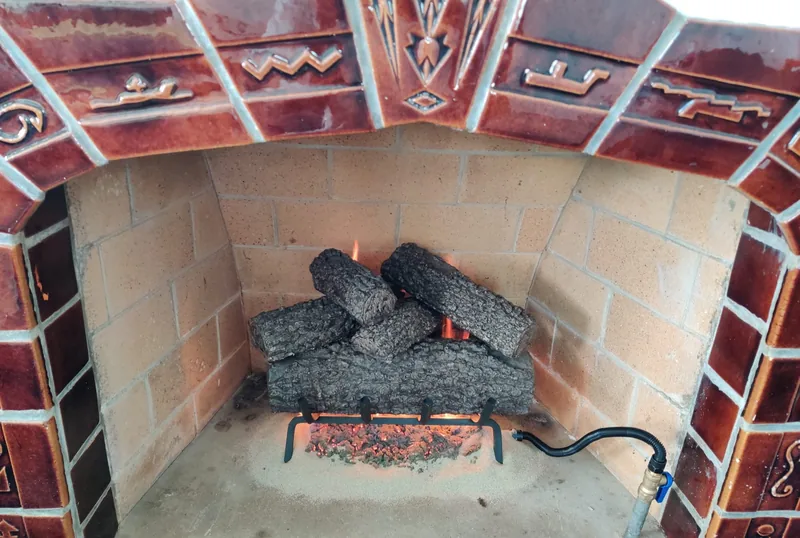
Gas fireplaces produce no creosote, no ash and no visible mess. So the reasoning goes: nothing accumulates, therefore nothing needs doing. It is a completely understandable conclusion and it is wrong in a specific and consequential way.
A wood fireplace tells you when it is neglected. It smokes, the glass blackens, the smell changes. A gas fireplace fails silently. The symptoms of a gas appliance in poor condition are incomplete combustion and compromised venting, and the product of those is carbon monoxide — which is odourless, colourless, and produces symptoms most people mistake for a winter cold.
The reason gas appliances need annual service is not that they get dirty. It is that when they fail, the failure is invisible.
Plenty, as it turns out. These are the components that need attention, and roughly none of them are visible to a homeowner.
Log placement deserves particular mention because it is so easily disturbed and so consequential. Gas logs are positioned to specific dimensions in the manufacturer's instructions. When a log gets knocked out of place — during cleaning, or by a curious child — the flame impinges directly on ceramic instead of burning freely. That produces soot, and soot on a gas appliance is a sign of incomplete combustion, which is the precursor to carbon monoxide.
The service a gas fireplace needs depends on which of three fundamentally different systems you have, and many homeowners do not know which is in their wall.
A sealed combustion chamber behind fixed glass, drawing combustion air from outside and exhausting outside through a coaxial pipe. The most common type in homes built since the 1990s. The glass seal is a safety component, not a convenience.
Draws combustion air from the room and vents through a vertical flue. Older technology, and dependent on adequate room air and a working draft. Vulnerable to the same negative pressure problems that affect wood fireplaces.
Burns entirely inside the room with no flue at all, relying on an oxygen depletion sensor for safety. Restricted or prohibited in some jurisdictions and in bedrooms and bathrooms. The oxygen depletion sensor is the only thing standing between the appliance and a serious problem.
If you have a vent-free appliance, the annual service is not optional under any circumstances, because the oxygen depletion sensor is a single point of failure with no backup.
An annual gas fireplace service should cover the appliance and the venting as one system. If someone quotes you for a gas fireplace service and does not go outside to look at the vent termination, they are doing half the job.
Between services, three things are worth watching. A healthy flame is steady with a defined blue base; yellow, lazy or flickering flames suggest incomplete combustion. Any soot deposit on the logs, the glass or the surround is a warning sign on a gas appliance, unlike a wood one. And a persistent sharp or sulphurous smell means stop using it and call.
Have a working carbon monoxide alarm on every level of the house with a fuel-burning appliance. It is California law in most dwellings, and on a gas appliance it is the only warning you will get.
Questions
It means you have been fortunate rather than that the appliance is in good order. Ten years is enough time for burner ports to clog, a glass gasket to harden, and a vent termination to collect debris. 'Works fine' on a gas appliance means it lights — it says nothing about whether combustion is complete or whether the venting is intact, and those are the parts that matter.
A faint burn-off smell for the first few fires of the season is normal, as dust settled on the burner and logs over the summer burns away. It should clear within a few hours of running. What is not normal is a persistent sulphurous, sooty or sharp smell, or one that returns every time you light it. That warrants stopping use and having it checked.
Yes, once it is fully cool, using a cleaner made for fireplace glass — ordinary household glass cleaners can etch the ceramic and leave permanent haze. Be careful reseating the glass afterwards on a direct-vent unit: the gasket seal is a safety component of a sealed combustion system, not just a way of keeping the draft out. If it does not seat cleanly, leave it and call.
Related
Gas log sets, wood stoves and fireplace inserts — cleaned, inspected, adjusted and repaired, including the connector pipe most sweeps skip.
Learn more about Fireplace & Wood Stove ServiceMore
William Chimney Sweep LLC
6130A Fair Oaks Blvd
Carmichael, CA 95608
(916) 269-0725
info@williamchimneysweepllc.com
| Monday | Open 24 hours |
|---|---|
| Tuesday | Open 24 hours |
| Wednesday | Open 24 hours |
| Thursday | Open 24 hours |
| Friday | Open 24 hours |
| Saturday | Open 24 hours |
| Sunday | Open 24 hours |
Fast response. No obligation.